Published 25 November 2026 · 6 min read
- The short answer: At the time of writing (late 2026), a 5 kW hybrid system with a 5 kWh battery and 6 to 8 panels costs R85,000 to R120,000 installed.
- Why the total is not just equipment: A common mistake is to add up the price of panels, an inverter and a battery from a shop listing and assume that is the cost of a system.
- Panels: the cheap part of the system: Panels cost roughly R1,500 to R3,000 each, which works out to about R3.40 per watt at the median.
- The inverter: the brain, priced by power: The inverter converts the DC power from panels and battery into AC power for your home, and a hybrid inverter also manages charging and the switch to backup.
- The battery: usually the biggest single line: Lithium batteries cost roughly R2,000 to R5,000 per kWh at the time of writing (late 2026), with about R3,000 per kWh as a typical figure.
The short answer
At the time of writing (late 2026), a 5 kW hybrid system with a 5 kWh battery and 6 to 8 panels costs R85,000 to R120,000 installed. Hardware is only about R44,000 of that at typical prices. The rest, often R40,000 or more, pays for mounting, cabling, protection, labour, compliance, travel and the installer's margin.
Most people look at a quote and see one big number. This article splits that number into the parts you can actually question. It does not tell you what any specific installer charges. It shows you what each line is for, so you can tell a fair quote from one that is padded or one that has left things out.
All prices below are at the time of writing (late 2026) and are rough guides. Your roof, your distribution board and the brands you choose will move them.
Why the total is not just equipment
A common mistake is to add up the price of panels, an inverter and a battery from a shop listing and assume that is the cost of a system. Equipment is only part of the job. Someone has to design it, carry it onto your roof, fix it down safely, run cable, fit protection, connect it to your board, test it and hand over paperwork.
As a rough rule, for a system with a battery, the hardware is somewhere between a third and a half of the installed price. For a grid-tied system with no battery, hardware makes up a bigger share because there is no expensive battery adding to the total but the labour and protection stay about the same.
Installed bands at the time of writing (late 2026) give you a sense of scale:
- 3 kW inverter with 5 kWh backup only (no panels): R45,000 to R65,000
- 5 kW hybrid with 5 kWh battery and 6 to 8 panels: R85,000 to R120,000
- 8 kW with 10 kWh battery: R140,000 to R200,000
- 10 kW with 15 kWh battery: R180,000 to R270,000
- Grid-tied 5 kWp with no battery: R55,000 to R80,000
Panels: the cheap part of the system
Panels cost roughly R1,500 to R3,000 each, which works out to about R3.40 per watt at the median. A system with 7 panels at around R2,000 each is about R14,000 in panels. That surprises people. The panels are the part everyone pictures when they think of solar, yet on a battery system they are often the smallest hardware line.
Price differences between panels come from wattage, brand, glass type (double glass costs more) and warranty terms. A bigger panel at a higher price per panel may still be cheaper per watt. When you compare quotes, ask for the panel count and the watts per panel and do the division yourself.
The inverter: the brain, priced by power
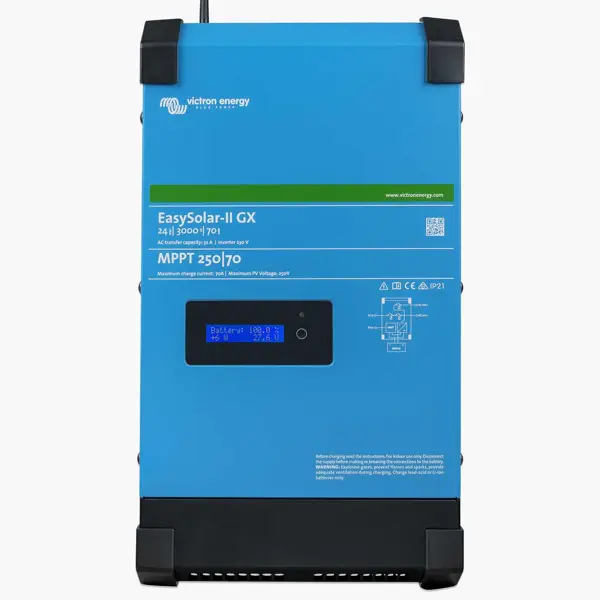
The inverter converts the DC power from panels and battery into AC power for your home, and a hybrid inverter also manages charging and the switch to backup. Hardware prices at the time of writing (late 2026): a 5 kW inverter has a median price of about R14,800 with a wide range from roughly R4,500 to R65,000. An 8 kW unit is about R23,000, a 10 kW about R29,600 and a 12 kW about R31,800.
The spread is large because the cheap end includes budget units with lower surge ability, fewer protections and thinner support, while the top end includes three-phase and high-voltage models. In our worked example below we use the R14,800 median.
The battery: usually the biggest single line
Lithium batteries cost roughly R2,000 to R5,000 per kWh at the time of writing (late 2026), with about R3,000 per kWh as a typical figure. That is battery only, with no installation. A 5 kWh battery at the typical figure is about R15,000, and a 10 kWh battery is about R30,000.
Because the battery scales with size, it is the line that moves your total the most. Going from a 5 kWh to a 15 kWh battery adds roughly R30,000 at typical prices before any extra labour or cabling. If your budget is tight, battery size is the first number to question, not the panel count.
Mounting, cabling and protection
This is the group of lines that never appears in a shop listing and that cheap quotes often underspecify. It covers the roof rails and clamps, DC cable from panels to inverter, AC cable to the board, battery cable and busbars, isolators, surge protection and breakers.
Roof type matters here. Corrugated sheeting, IBR, concrete tile and flat concrete slabs each need different fixings. A tile roof or a long cable run to a distant garage adds material and time. Protection devices are not extras you can skip. Surge protection and correctly rated breakers are what stop a lightning event or a fault from turning into a fire.
Labour, travel and compliance
Installation takes skilled hands. A qualified electrician or solar technician, usually working with a helper, will spend one to several days on a typical home, depending on the size and the layout. You pay for their time, transport, tools and the insurance that covers the job.
Compliance is a real cost too. A registered electrician must sign off the work and issue a Certificate of Compliance for the electrical installation. If you are in a city that requires registration of embedded generation, there may also be application steps and fees with your municipality. Ask the installer who handles this and whether it is in the price. Some quotes include it, and some leave it for you to chase.
Overheads and margin
A business that designs systems, answers calls after the sale, carries stock and honours warranties needs to cover those costs. That sits in the price as overhead and margin. It is not wasted money. It is the part that pays for someone to pick up the phone when your inverter shows a fault code in six months.
The honest question is not whether margin exists but what you get for it: a proper site visit, a written design, a named person responsible for the workmanship, and a clear warranty route. A lower margin with no after-sales support can cost far more later.
A worked example: a 5 kW hybrid with 5 kWh and 7 panels
Here is an illustrative split using the typical prices above. It is a model for understanding, not a real quote.
- 7 panels at about R2,000 each: about R14,000
- 5 kW hybrid inverter at the median: about R14,800
- 5 kWh lithium battery at about R3,000 per kWh: about R15,000
- Hardware subtotal: about R43,800
Against an installed band of R85,000 to R120,000, that leaves roughly R41,000 to R76,000 for mounting, cable, protection, labour, certificate, travel, overhead and margin. The low end of that gap suggests a lean, simple job on an easy roof. The high end suggests a complex roof, higher-grade components, longer cable runs or a premium support package.
If a quote for this size sits far below R85,000, it is worth asking which lines have been trimmed. If it sits far above R120,000, ask what is driving it.
Where you can trim and where you should not
You can reasonably save money by right-sizing the battery to your real evening load, choosing a mid-range panel rather than the premium option, or keeping the inverter close to the board to shorten cable runs.
You should not save by dropping protection devices, accepting a quote with no Certificate of Compliance, or choosing an installer who cannot explain the design. Those savings come back as faults, insurance trouble or an installation that cannot legally be signed off.
Next step
Take any quote you have and rewrite it into the lines above: panels, inverter, battery, mounting and cable, protection, labour, compliance, and margin. Whatever line is missing or vague is your question for the installer.
If you want a quote that shows these lines clearly, send SA Solar Hub your roof type, your monthly electricity use and what you want to keep running during an outage, and we will price it line by line.
Frequently asked questions
How much of a solar quote is just equipment?
Roughly a third to a half on a battery system. In a 5 kW hybrid example at typical late-2026 prices, panels, inverter and battery come to about R44,000 against an installed band of R85,000 to R120,000. The remainder covers mounting, cabling, protection, labour, compliance and the installer's margin.
Which part of a solar system costs the most?
The battery usually costs the most on a hybrid system. At about R3,000 per kWh typical, a 10 kWh battery is around R30,000 on its own, which is more than a mid-range 5 kW inverter and a handful of panels combined. On a grid-tied system with no battery, panels and labour dominate.
Is a Certificate of Compliance included in the installation price?
It should be, but you must confirm it. A registered electrician has to sign off the electrical work and issue the certificate. Some installers include it and handle any municipal registration, while others leave it out of the quote. Ask for it in writing before you accept.
Why do labour costs vary between installers?
Labour varies with roof type, cable runs, the state of your distribution board and how many people are on site. A flat slab roof with the inverter next to the board is quick. A tile roof with a long run to a detached garage takes more days, and the price follows.
Can I cut the cost by buying the equipment myself?
You can, but it often costs you in other ways. Many installers will not warranty their labour on customer-supplied equipment, and you lose the single point of responsibility if something fails. If you do it, agree in writing who covers faults and who signs off compliance.
What is a fair price per kW for a solar installation?
About R11,000 to R16,000 per kW for grid-tied and R15,000 to R27,500 per kW for hybrid with a battery, at the time of writing (late 2026). Use these as sanity checks only, since battery size changes the per-kW figure a lot.
Official sources
- Department of Employment and Labour (Electrical Installation Regulations, CoC)
- Electrical Contractors' Board of South Africa
- SABS (publisher of NRS 097-2-1)
Put it into practice
More guides
Compare systems, panels and brands
Panels and brands:
Complete guides: Solar panels in South Africa · Solar panel installation in South Africa