Published 18 November 2026 · 9 min read
- The short answer on solar gate motor cost: If you are asking how much solar powered gates cost, here is the short version.
- How a solar gate motor works: Most residential gate motors in South Africa already run on a 12-volt battery.
- What is in a solar gate motor kit: Kit contents vary between suppliers, but most include the following.
- Cost breakdown for common setups: Here are generic examples.
- Battery sizing for a gate motor: Battery size decides how many gate cycles you get without sun.
The short answer on solar gate motor cost
If you are asking how much solar powered gates cost, here is the short version. As of late 2026, prices vary, but a complete solar gate motor setup for a standard residential sliding or swing gate often falls in the range of R7,000 to R18,000 installed. Motor kits without installation sit lower, and heavier or industrial gates cost more.
The reason there is such a spread is that the final price depends on the gate itself, not just the solar part. A light aluminium swing gate and a heavy steel sliding gate need very different motors. The solar panel and battery are usually the smaller portion of the bill.
This guide explains what is in a solar gate motor kit, how to size the battery and panel, what happens in winter or when the gate is used heavily, and what typical setups look like. We describe them generically, because the right choice depends on your gate weight, traffic and site, and you should always check specifications before buying.
How a solar gate motor works
Most residential gate motors in South Africa already run on a 12-volt battery. The motor is powered by the battery, and a small mains charger keeps the battery topped up. When the power goes out, the battery keeps the gate working for a number of cycles.
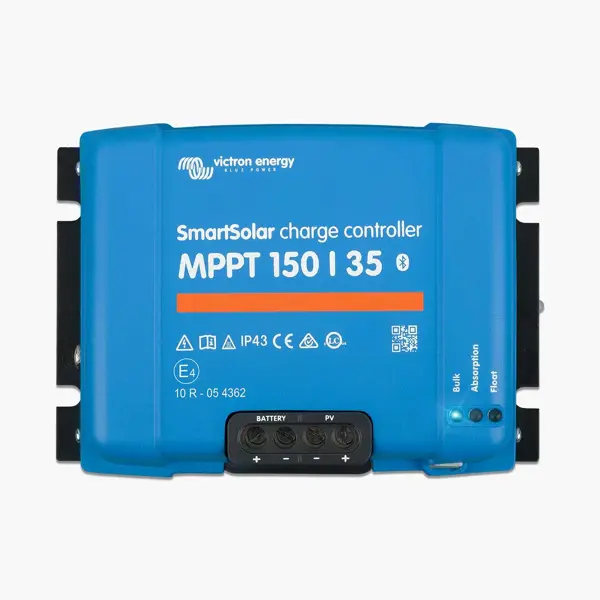
A solar setup replaces or supplements the mains charger with a solar panel and a charge controller. The panel feeds the battery during the day, the controller prevents overcharging, and the motor draws power from the battery when the gate opens or closes.
This is why solar gates suit homes with unreliable power, remote driveways and farms, where running a mains cable to the gate is expensive. A trench and cable run of 30 to 50 metres can cost several thousand rand, and a solar kit can be cheaper than that.
The control board, remotes and safety devices work exactly as they do on a mains-charged system. You still need photocell beams, limit switches or magnets and, if you want it, an intercom or keypad.
What is in a solar gate motor kit
Kit contents vary between suppliers, but most include the following.
- The gate motor and control board, for either sliding or swing gates.
- A 12 V sealed lead-acid or lithium battery, often 7 Ah to 18 Ah, sometimes larger.
- A solar panel, commonly 20 W to 100 W.
- A solar charge controller, if not built into the board.
- Mounting bracket for the panel, and cabling.
- Remote controls, usually two.
- Gear rack for sliding gates, which is sometimes sold separately.
Always check what is missing. Gear racks, rails, wheels, photocells, battery boxes and electrical connections can add several hundred to a couple of thousand rand. Ask for a written list.
Indicative price ranges as of late 2026, prices vary: a basic solar sliding gate motor kit R6,000 to R12,000, a premium or heavy-duty one R12,000 to R25,000, and a swing gate pair kit R7,000 to R18,000. These do not include installation, which commonly runs R1,500 to R5,000 depending on the gate, trenching and site.
Cost breakdown for common setups
Here are generic examples. They are illustrations to help you budget, not quotes.
Setup A, light residential sliding gate, about 4 to 6 metres, up to 300 kg. Motor and control board R3,500 to R6,500, battery R400 to R900, 30 to 50 W solar panel and controller R600 to R1,500, installation R1,500 to R3,500. Total about R6,000 to R12,000.
Setup B, heavy residential or farm sliding gate, about 6 to 8 metres, 500 to 800 kg. Motor and control board R6,500 to R12,000, bigger battery R800 to R2,000, 80 to 100 W panel and controller R1,200 to R2,500, installation R2,500 to R5,000. Total about R11,000 to R21,000.
Setup C, double swing gate on a home or smallholding. Two actuators and controller R5,500 to R12,000, battery and panel R1,200 to R3,500, installation R2,000 to R5,000. Total about R9,000 to R20,000.
Setup D, add-on solar to an existing motor. Just a panel, controller and battery, R1,200 to R3,500 plus fitting. This can be the cheapest upgrade if the existing motor is already 12 V.
Battery sizing for a gate motor
Battery size decides how many gate cycles you get without sun. The approach is simple.
First, estimate how much energy one open-and-close cycle uses. This varies with gate weight, motor and distance. A light gate may use roughly 0.3 to 0.8 amp-hours per cycle at 12 V, and a heavy gate several times more. Check the motor's datasheet, and treat these numbers as rough.
Second, count your daily cycles. A home with four people might use the gate 10 to 30 times a day. A farm or small business might use it more.
Third, add standby use. The control board, receiver and photocells draw a small current all the time, often 20 to 100 mA. At 50 mA, that is 1.2 Ah a day, which is more than a few gate cycles.
Fourth, decide autonomy, or how many days you want to run without sun. Two to three days is sensible for most homes.
Worked example: 20 cycles at 0.5 Ah is 10 Ah, plus 1.2 Ah standby, around 11 Ah a day. For three days, that is 33 Ah. Lead-acid batteries should not be discharged below about 50 percent, so you would want roughly 65 Ah, more than most kits supply. That is why heavy use needs a bigger battery or a larger panel.
If your gate is used less, a 7 to 18 Ah battery is common and fine.
Panel sizing and the winter sun problem
The solar panel has to put back what the gate takes out, in the worst month. In South Africa, that is usually June or July.
Let us keep the 11 Ah daily consumption from above. A 12 V panel rated 50 W gives about 4 A at peak, but you will not get peak all day. Take around 3 to 4 equivalent sun hours in a Gauteng winter, and allow for charge controller and battery losses. A 50 W panel might deliver roughly 8 to 12 Ah a day in winter, so it would just about cover 11 Ah. A 100 W panel gives more margin.
- Key points about panel placement:
- Face the panel north, tilted around 30 to 40 degrees for winter, in the southern hemisphere.
- Keep it clear of shade from walls, trees and the gate itself.
- Mount it high or protect it, because theft and vandalism are real.
- Clean it occasionally, as dust from unpaved roads lowers output.
- Cloud and rain reduce charging, so in the Western Cape and coastal areas, consider a larger panel.
If your gate is used lightly, a 20 to 30 W panel is enough. For busy gates, go 80 to 100 W or more.
Lithium or lead-acid batteries for gates
Most gate motor kits come with sealed lead-acid batteries because they are cheap and widely available. They typically last two to four years in gate use, depending on temperature, depth of discharge and charging quality. Hot battery boxes in direct sun shorten life.
Lithium iron phosphate batteries (LiFePO4) cost more, often two to four times more per amp-hour, but can last much longer, tolerate deeper discharge and handle partial charge better, which suits solar. However, not every gate motor board and charge controller is tuned for lithium, so check compatibility before buying. Using a lithium battery on a charger designed for lead-acid may not charge it fully, or may need a different setting.
A practical approach: for a light-use gate, a good lead-acid battery and a correctly sized panel is the cheapest route. For a gate with heavy use, harsh heat or a remote location where battery replacement is a hassle, lithium can be worth the premium.
Whichever you choose, replace aged batteries before they fail. A battery that sags at 11 V can make the motor stall and look like a faulty board.
Installation, safety and what a good quote includes
Gate motors can injure people and children if they are not installed properly. Safety devices matter. Photocell beams should stop the gate when something is in its path, and motors should have adjustable force settings and a safe obstruction response. In South Africa, installers follow guidance such as SANS 10142-1 for wiring and relevant machinery safety guidance for automated gates, and any mains-side connection should be done by a registered electrician who issues a certificate of compliance.
- A good written quote should say:
- The gate type, weight and length it is designed for, with the motor's rated capacity.
- Battery type and Ah rating, panel wattage, and controller model.
- Whether the gear rack, rails, wheels and photocells are included.
- Number of remotes, and whether backup battery and manual release are covered.
- Warranty on the motor, battery and panel, and who supplies service.
- Installation time and what is excluded, such as trenching or gate repairs.
Also ask whether the gate is in good mechanical shape. A gate that sticks, drags or sags will overload any motor, and a solar gate is less forgiving, because the battery has limited reserve. Fixing wheels, rails and hinges first often saves more than upgrading the motor.
Is a solar gate worth it? Running costs and alternatives
Solar gates have almost no running cost, but they cost more up front and need a good battery. A mains-charged gate motor with a battery is cheaper to buy, and the charger uses very little electricity, often a few rand a month. So the saving is not about the electricity bill. It is about reliability and avoiding a cable run.
Solar makes the most sense when the gate is far from the house or the mains, when your property has frequent power cuts, or when you want a gate that keeps working through long outages. If you already have an inverter system at home, powering the gate from the house supply can be cheaper than a separate solar kit, as long as the circuit is on your backup side.
Also consider hybrid options. Many motors can be charged from either mains or a small solar panel, giving you a backup if the mains fails or the panel is shaded for a week.
For most urban homes with an existing gate motor, the cheapest improvement is a better battery and a small solar trickle charger, rather than a new motor.
Next step
Before you buy, measure your gate length, estimate its weight, and note whether it slides or swings. Count how many times a day it opens, and check where the sun hits the best spot for a panel.
Send those details to SA Solar Hub, along with a photo of your gate and the existing motor, if any. We will recommend a motor size, battery and panel, and give you a written parts list with prices as of late 2026, prices vary. You can also browse solar panels, charge controllers and 12 V batteries in the shop, and ask us about add-on solar for a motor you already own.
Frequently asked questions
How much do solar powered gates cost in South Africa?
As of late 2026, prices vary, but a complete solar gate motor setup for a standard home often costs about R7,000 to R18,000 installed. Basic kits start lower, and heavy sliding gates, farm gates or double swing gates cost more. The gate weight and installation difficulty drive the price.
What size solar panel do I need for a gate motor?
A light-use gate can run on a 20 to 30 W panel, while a typical home gate usually needs 30 to 50 W. Busy or heavy gates, or those in cloudy areas, may need 80 to 100 W. Size it for winter, when sun hours are lowest, not for summer.
What battery size does a solar gate motor need?
Many kits use a 12 V battery of 7 to 18 Ah, which suits light use. To size properly, add up daily gate cycles and standby current, then allow two to three days of autonomy. Lead-acid batteries should not be discharged below about 50 percent, so you often need more capacity than expected.
Will a solar gate work in winter or on cloudy days?
Yes, if the panel and battery are sized for winter. Gauteng winters are sunny but short, so output drops. Cloudy days reduce charging, and a good battery covers a few days. In wetter regions, use a larger panel and battery, and keep the panel clean and unshaded.
Can I add solar to my existing gate motor?
Often yes, if the motor runs on 12 V. You add a panel, a solar charge controller and sometimes a bigger battery, typically for R1,200 to R3,500 plus fitting. Check the motor and board specifications first, and make sure the charger and battery type are compatible.
How long do gate motor batteries last on solar?
Sealed lead-acid batteries typically last two to four years in gate use, depending on heat, usage and charging quality. Lithium iron phosphate batteries can last longer but cost more and need a compatible charger. Replace batteries before they fail, as a weak battery can make the motor stall.
Is a solar gate cheaper than running mains cable to the gate?
It can be, especially over long distances. Trenching and cabling 30 to 50 metres to a remote gate can cost several thousand rand, while a solar charge kit often costs R1,200 to R3,500. Short runs near the house are usually cheaper on mains, and certified electrical work is needed either way.
Official sources
- Eskom
- SALGA / AMEU embedded generation resource portal (SSEG)
- Global Solar Atlas (World Bank Group / Solargis)
Put it into practice
More guides
Compare systems, panels and brands
Panels and brands:
Complete guides: Solar panels in South Africa · Solar panel installation in South Africa